

Flake Epoxy Garage Floor
The chip floor most Chula Vista price guides list first, with its layers, the broadcast choice, colors for a bay-side or hillside garage and a cost table by garage size.
Typically from $5/sq ft
Garage floors and commercial floor coatings · Chula Vista, CA
Epoxy Floors Bay Chula Vista is a local guide and availability check for epoxy and polyaspartic floor coatings in Chula Vista — garage floors in older homes near the bay and in the master-planned communities farther east, and floors for the shops, kitchens, warehouses, showrooms, gyms and clinics around Third Avenue, Bay Boulevard and Main Street. See a typical price for your own square footage, how the systems compare, and whether a local coating installer has openings for your ZIP yet.
Notify me when bookings open · typical prices in about 30 seconds
Bookings aren't open yet. Leave your name and number; your message is recorded, and you'll get one message when a local installer is available.
 Illustration
AI-generated illustration. The people shown are not real installers.
Six garage pages, one for each decision: which system, how the slab is prepared and what to do about an old coating.
The chip floor most Chula Vista price guides list first, with its layers, the broadcast choice, colors for a bay-side or hillside garage and a cost table by garage size.
Typically from $5/sq ft

Fast-curing coatings explained plainly for Chula Vista garages — the schedule, the limits on a damp bay-side slab, the hybrid option and prices from 1 to 5 cars.
Typically from $7/sq ft

One flat color, the lowest-priced garage coating system — when it fits a Chula Vista workshop or rental, how much grit to ask for and an honest DIY comparison.
Typically from $3/sq ft

The swirled, high-gloss floor and its demands — the slab it needs, the faults to watch and prices for garages of every size.
Typically from $8/sq ft

What a Chula Vista slab needs before any coating goes on — grinding, filling cracks, testing for moisture — with a table of what each condition adds to the price.
Typically from $1/sq ft

Why an old coat failed, how it comes off and what a recoat should change, with the added cost for 1- to 5-car garages.
Typically from $2/sq ft
 Illustration
Typical total $1,110–$2,320
 Illustration
Typical total $3,770–$6,860
 Illustration
Typical total $5,000–$8,700
 Illustration
Typical total $15,700–$35,100
 Illustration
Typical total $13,500–$24,500
 Illustration
Typical total $15,100–$38,100
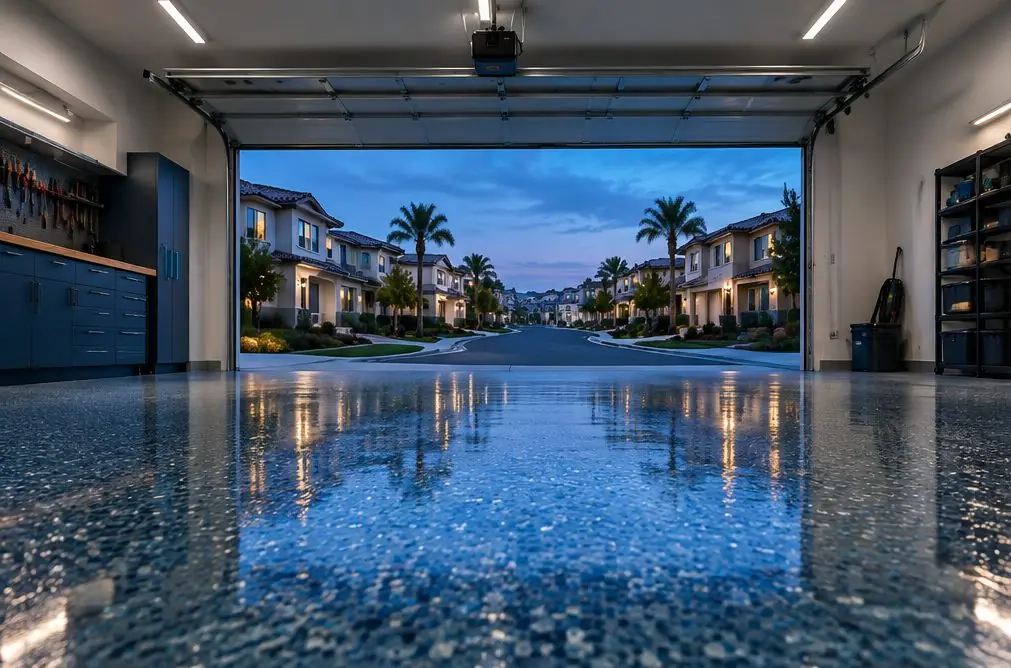
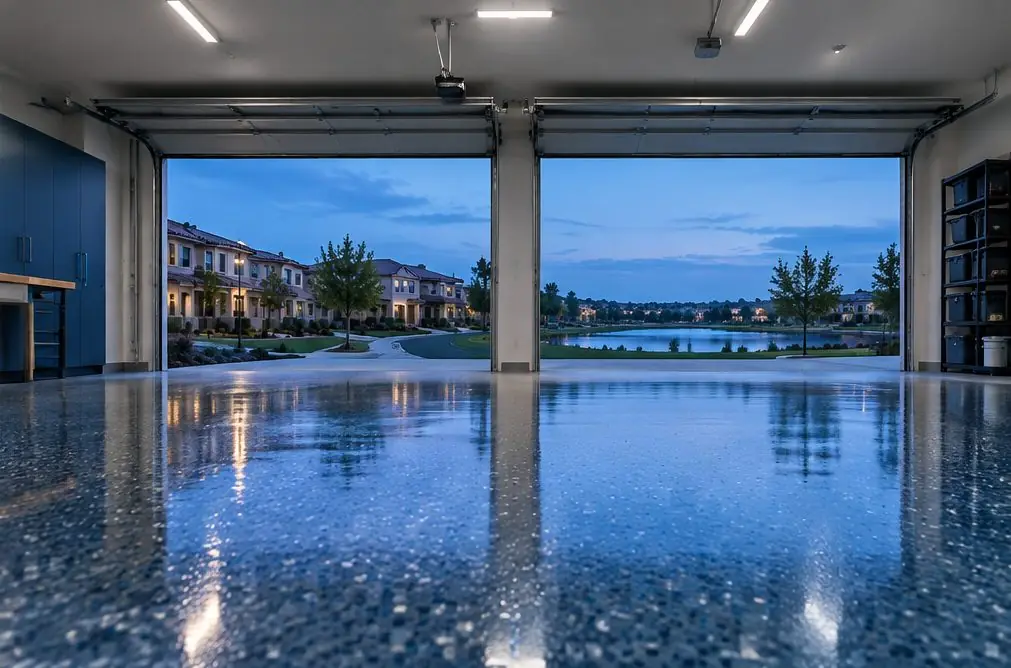
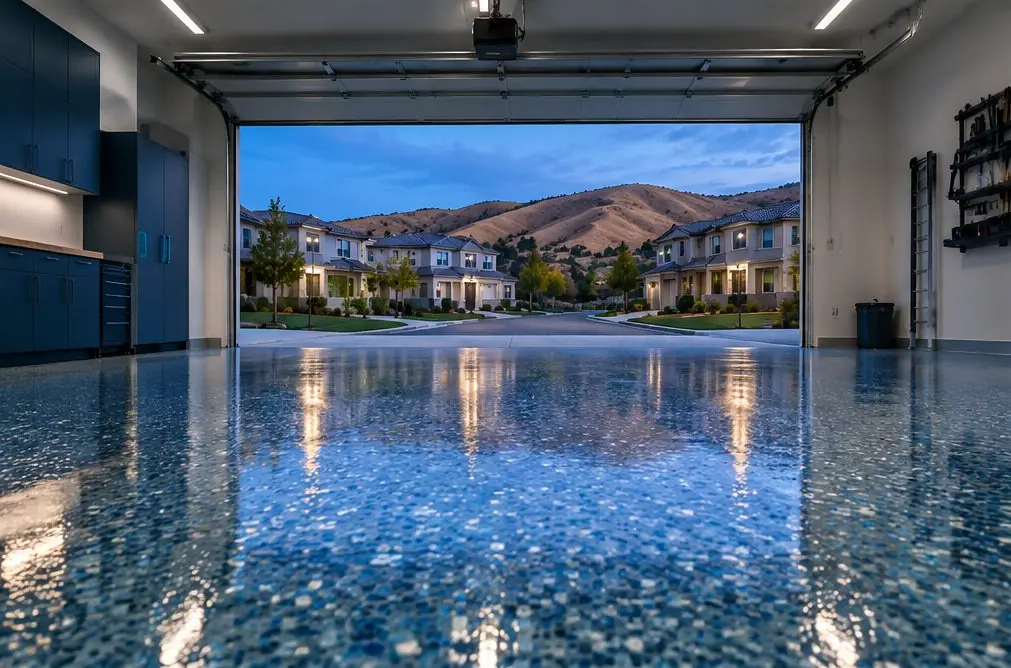
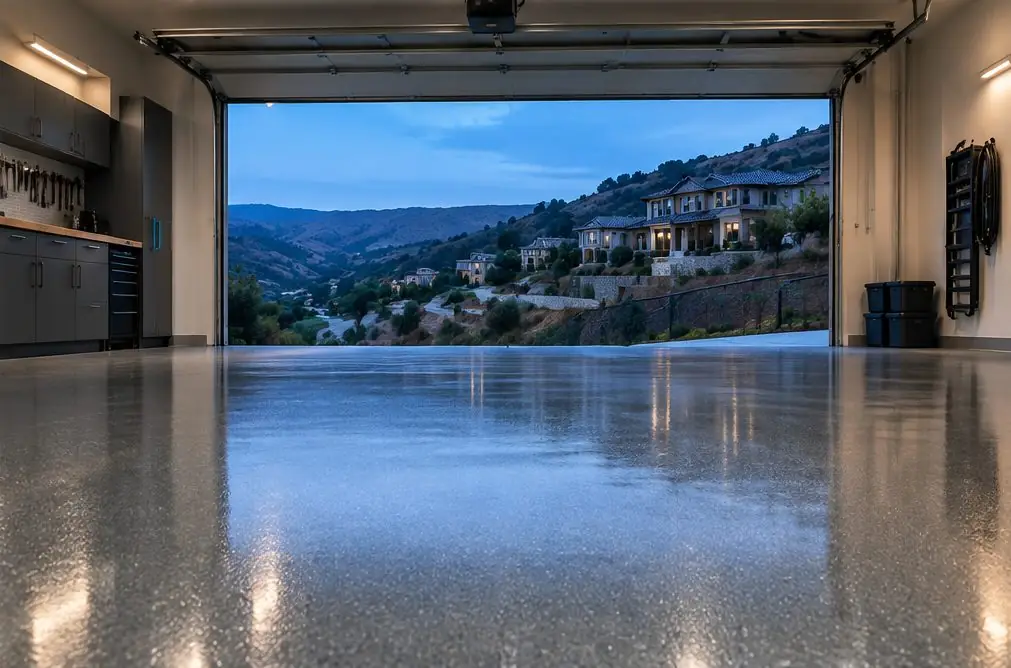
Hypothetical typical projects. Pictures are AI-generated concept illustrations, not photos of completed installations; no installation was performed or arranged through this site; prices are typical Chula Vista area market ranges, not quotes.
Garage or business, size, system and slab, one question at a time; the total updates as you go.
Takes about 30 seconds · no sign-up to see your range
Check availability and get your Chula Vista area price range
Bookings aren't open yet — a typical Chula Vista range in about 30 seconds.
Chula Vista stretches from the edge of San Diego Bay to the hills at its eastern border. The 1991–2020 normals put the mean daily high at 71.0°F in June, 74.6°F in July, 76.9°F in August and 77.1°F in September, with a record of 103°F in September.
| Month | Mean daily high | What it changes for a garage floor |
|---|---|---|
| June | 71.0°F | Marine layer mornings keep concrete cool and damp; the dew point matters before the base coat |
| July | 74.6°F | Mild days, but a slab shaded all day stays cooler than the air and can sweat |
| August | 76.9°F | An open garage door lets in sun that ambers a standard epoxy top coat |
| September | 77.1°F | The warmest month on average; hot tires on a warm driveway test the top coat |
West of Hilltop Drive the houses are older and sit nearer the bay. Near the coast, damp air slows curing and can raise slab moisture; installers watch the dew point and the slab temperature before coating. A slab poured decades ago may have no vapor barrier under it, so moisture is tested rather than assumed.
Farther east the picture changes. Eastlake began in 1986, Rancho del Rey followed in 1989 and Otay Ranch began building in 1999, so the garages there are newer, usually in communities with homeowners associations. The wording of the association's rules decides about contractor parking, open garage doors and work hours, not the floor itself. A slab that is only a few years old can still be releasing water, which a moisture test shows.
Epoxy can amber in sunlight, which matters when the door stays open; aliphatic polyaspartic or polyurethane top coats are generally more UV-stable. Hot-tire pickup, a warm tire lifting the coating, is mostly a prep and product problem; a ground slab and a system rated for it reduce the risk.
Six kinds of business floor, each with its own page: what the floor carries, which systems are often considered and how the work is planned around the people using the space.
IllustrationAisles, docks and forklift paths in industrial buildings across the city, with joint filling, striping and a priced 3,000 sq ft example.
Often considered Solid-color epoxy with grit
Typically from $3 per sq ft
IllustrationHot washdowns, coved edges and the county plan check for restaurant and brewery kitchens, with urethane cement and epoxy compared room by room.
Often considered Urethane cement (heat and washdown areas)
Typically from $10 per sq ft
IllustrationRepair bays, lift footprints and fluids, with a chemical-resistance chart read properly and a four-bay shop priced.
Often considered Quartz-filled broadcast epoxy
Typically from $3 per sq ft
 Illustration
A store floor that looks like part of the brand, wears well and is installed in sections around opening hours.
Often considered Decorative flake (chip) epoxy
Typically from $6 per sq ft
 Illustration
Which parts of a gym suit a resin floor and which need rubber, with wet-area texture, cove and reopening notes.
Often considered Decorative flake (chip) epoxy
Typically from $6 per sq ft
 Illustration
Seamless, coved, easy-to-clean floors for private clinics, done room by room around the appointment book.
Often considered Solid-color epoxy with grit
Typically from $3 per sq ft
Price a business floor Each kind of floor has its own page under Commercial floors in the menu.
Each card shows what is stacked on the ground slab and what the same system typically costs for a 2-car garage with a sound slab.
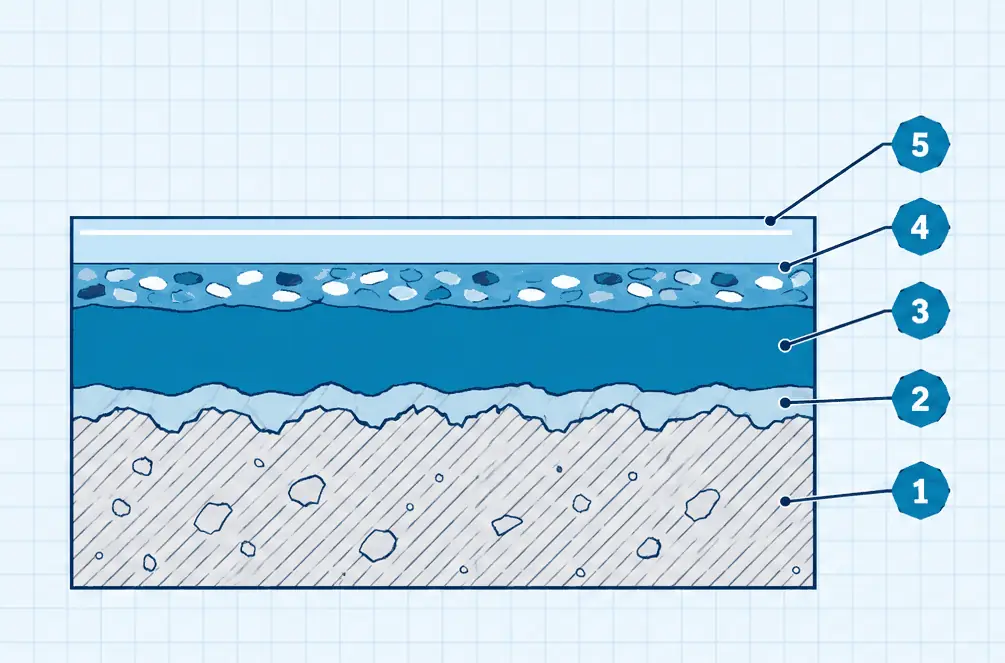
Fits Fits a garage that wants color, hides tire marks and dust and has some texture underfoot. Full broadcast hides the base color completely.
Typically $5–$8 per sq ft about $2,200–$3,520 for 440 sq ft, installed
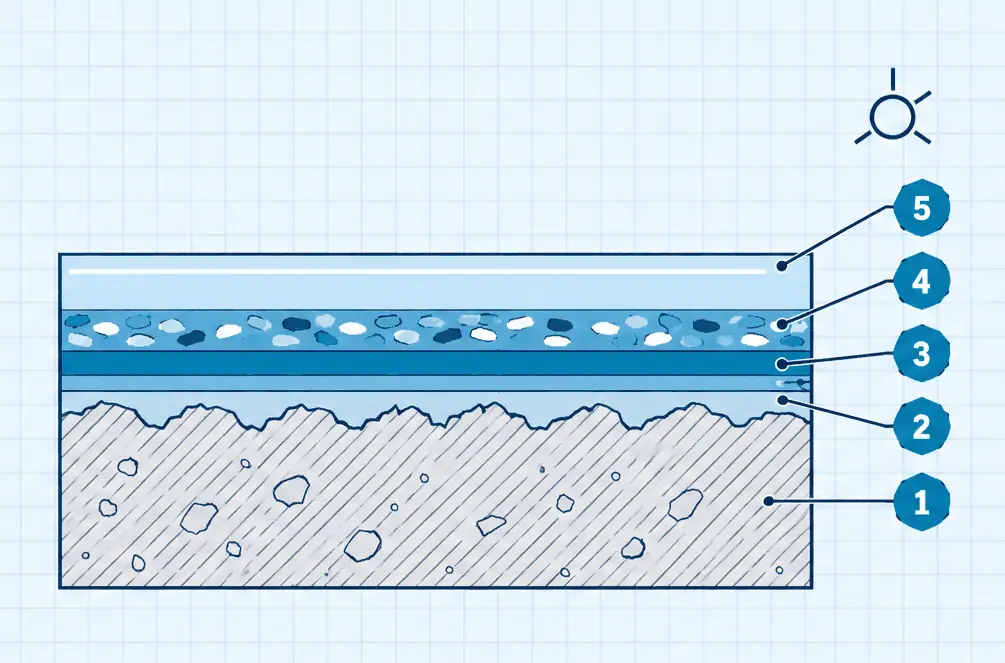
Fits Fits a garage where the door stays open to afternoon sun, or where the floor has to be back in service quickly.
Typically $7–$12 per sq ft about $3,080–$5,280 for 440 sq ft, installed
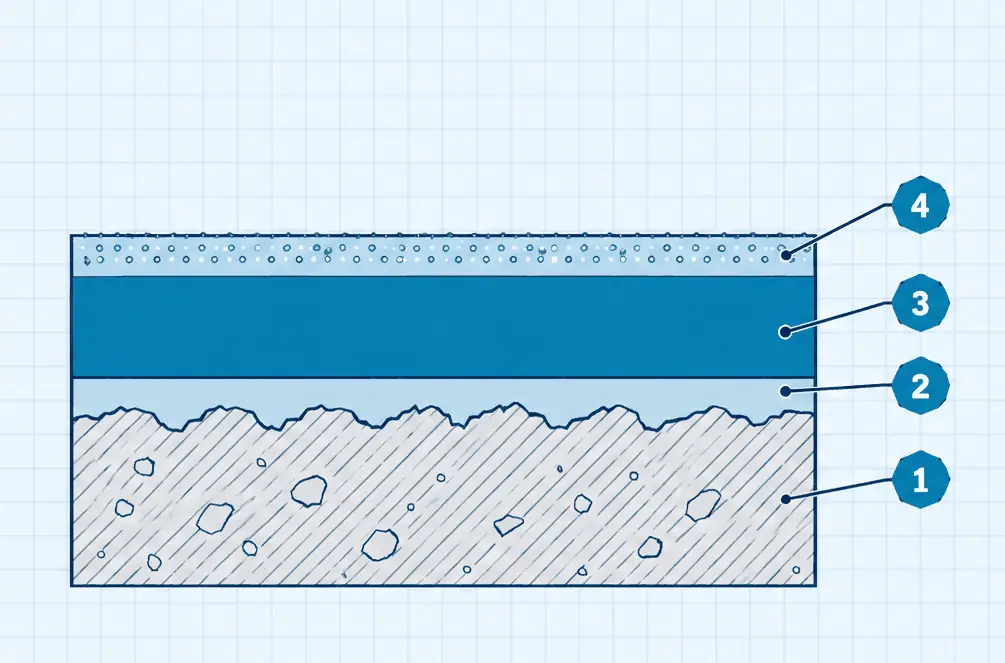
Fits Fits a workshop or a budget refresh where a plain, easy-to-clean surface matters more than a decorative finish.
Typically $3–$6 per sq ft about $1,320–$2,640 for 440 sq ft, installed
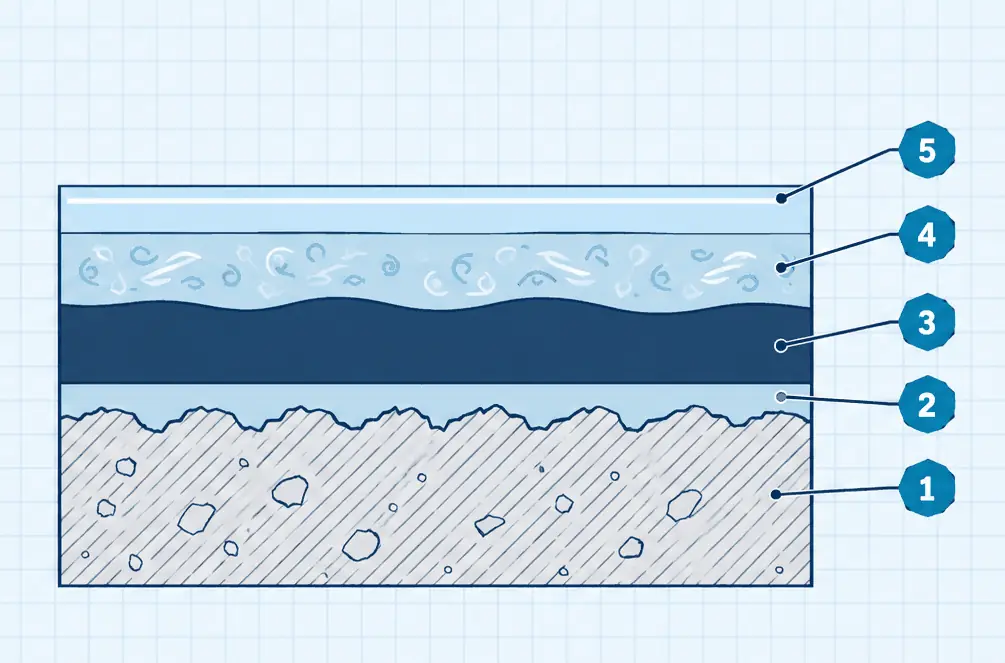
Fits Fits a showpiece garage where the swirled, deep-color look is the point and the slab is in good shape.
Typically $8–$12 per sq ft about $3,520–$5,280 for 440 sq ft, installed
Every vendor argues for its own product, so here is the side-by-side as plain trade-offs. Cost bands come from the calculator on this page; the rest is general product behavior, and the data sheet of the actual product decides.
| System | Typical cost | Install speed | Sunlight and heat | Where it tends to fail |
|---|---|---|---|---|
| Flake (chip) epoxy with epoxy top coat | $5–$8 per sq ft | Usually two to three days before a car | Amber tint can show after years of sun | Weak prep, moisture, hot-tire pickup on a thin top coat |
| Polyaspartic flake, polyaspartic top coat | $7–$12 per sq ft | Often one day; vehicles per data sheet | Generally more UV-stable than epoxy | Mixed too fast in warm weather, poor prep, odor while curing |
| Polyurea (aliphatic) top coat over epoxy base | $6–$10 per sq ft | One to two days | Generally UV-stable, flexible | Thin base coat, lap lines, a cold or damp slab |
| Hybrid: epoxy base, polyaspartic top coat | $6–$10 per sq ft | Two days | UV-stable top, longer working time below | Skipped moisture test, rushed recoat window |
| Solid color epoxy, grit in the top coat | $3–$6 per sq ft | Two days | Can chalk or amber in direct sun | Thin film, bare spots, slippery if grit is left out |
| Metallic epoxy with clear top coat | $8–$12 per sq ft | Three to four days | Clear coat choice sets UV behavior | Uneven slab shows, bubbles and pinholes, scratches show |
Cost bands are market estimates, not quotes. The hybrid and polyurea rows sit between the sourced epoxy and polyaspartic bands. No claim of strength or lifespan is made for any row; compare film thickness, prep and the written terms instead.
 Empty, measure, inspectThe garage or room is cleared and measured wall to wall, and cracks, oil, old paint and damp patches are marked before a price is final.
 Grind the surfaceA diamond grinder with a dust shroud and a vacuum opens the concrete to a rough texture the primer can grip. Acid etching alone does not do the same job.
 Repair and testCracks and spalls are filled and ground flush. Where the product data sheet calls for it, the slab is tested for moisture before anything is rolled on.
 Roll the base coat, broadcast the flakesThe base coat goes down wet. For a flake floor, color chips are thrown by hand into the wet coat to full or partial coverage.
 Scrape, vacuum, sealLoose flakes are scraped and vacuumed off, then a clear top coat locks in the chips and sets the sheen and how the surface behaves in sunlight.
 Cure, then return to usePeople, carts and cars come back only after the times on the product data sheet for that day's temperature and humidity.
Check the contractor's license at cslb.ca.gov before signing; work above $1,000 requires one.
Pick a base color and two to four flake colors. The swatches show the same mix as a full broadcast, where the flakes hide the base completely, and as a partial broadcast, where the base shows between them.
On-screen approximation; ask for a physical sample board.
Epoxy Floors Bay Chula Vista covers Downtown and Third Avenue, Castle Park and Southwest Chula Vista, Bayfront and Bay Boulevard, Main Street in Otay, Rancho del Rey and Sunbow, Eastlake, Otay Ranch, Rolling Hills Ranch — pick your neighborhood from the menu for local details and ZIP codes.
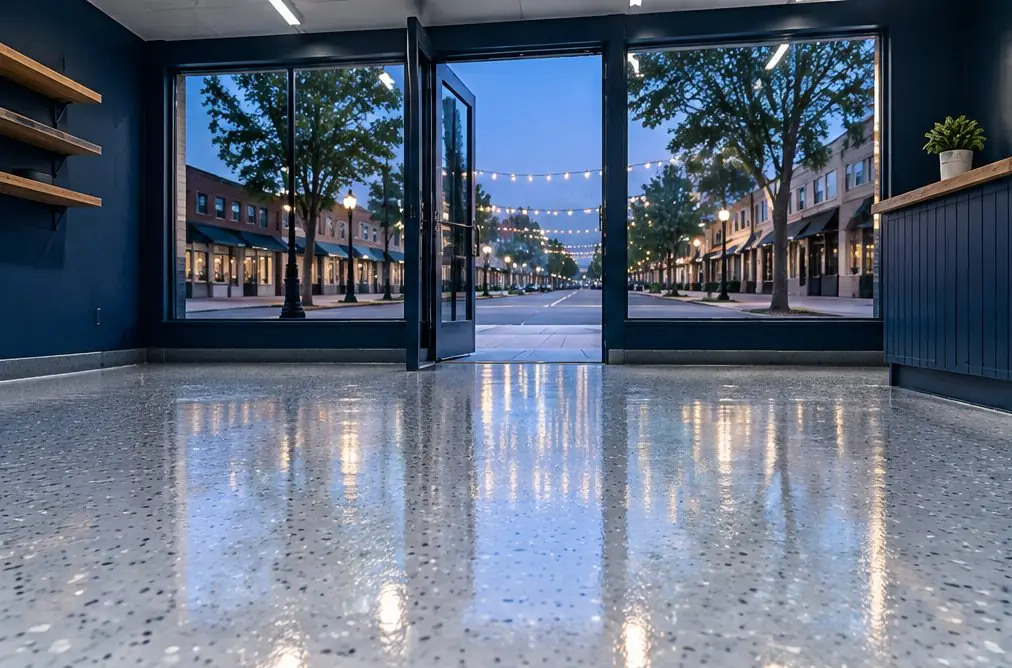
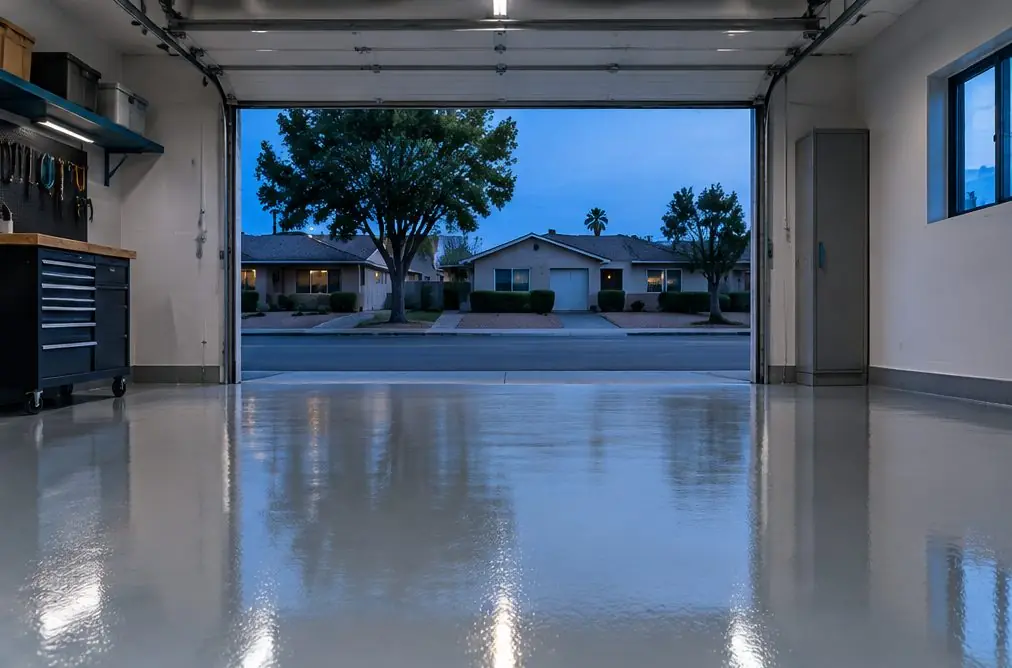
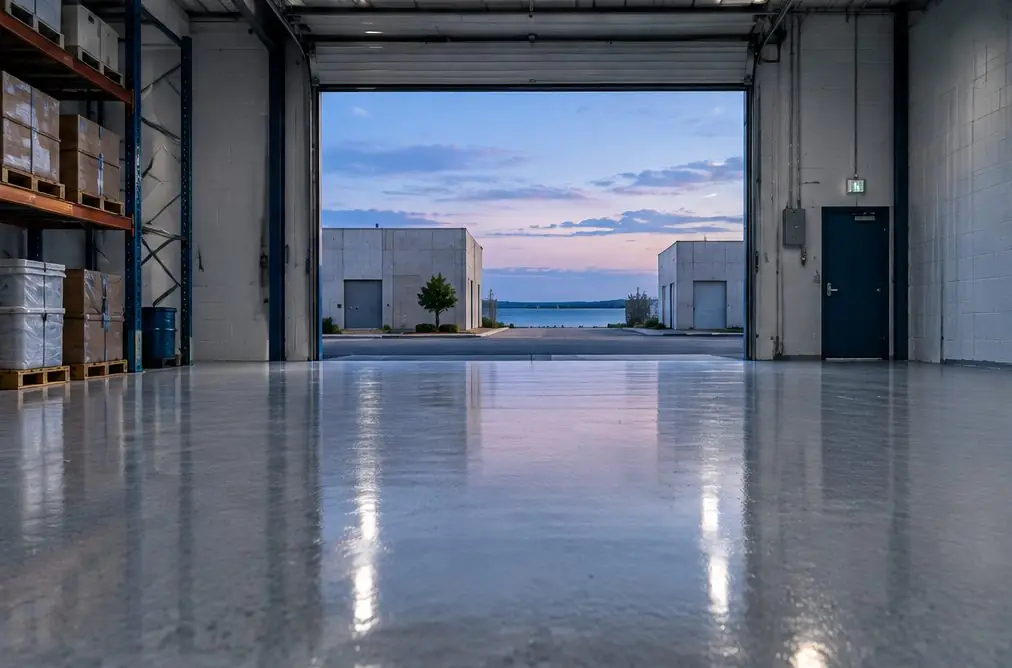
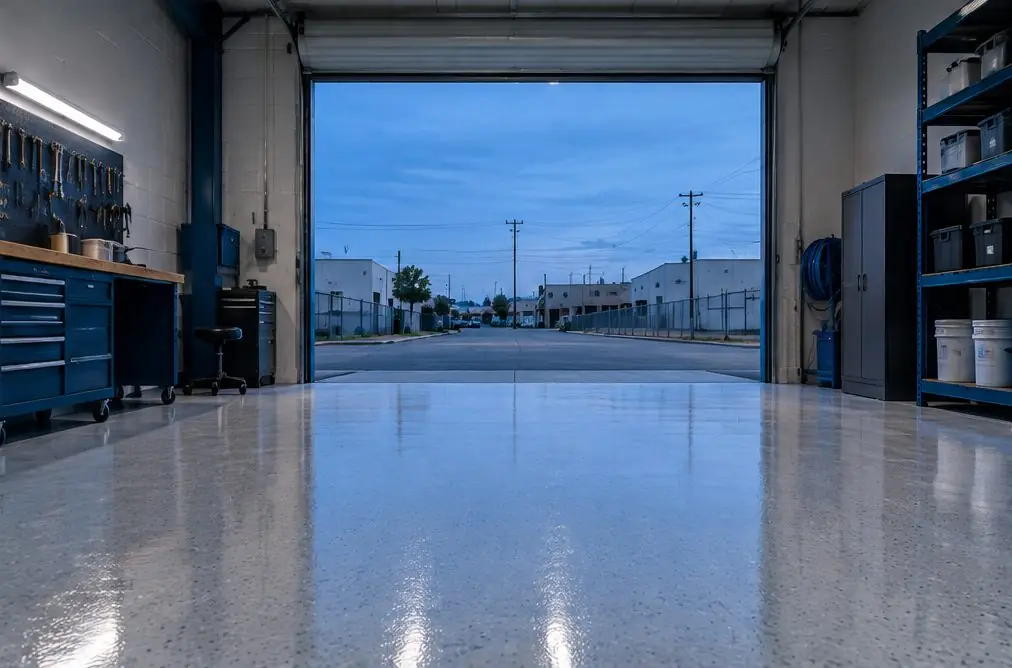
In 2026 a typical Chula Vista range is about $5–$8 per square foot for flake epoxy, $7–$12 for polyaspartic flake, $3–$6 for solid color and $8–$12 for metallic, on a sound slab. A 2-car garage of about 440 square feet in flake epoxy lands near $2,200–$3,500. Cracks add $1–$2 per square foot, removing an old coating $2–$4. These are market estimates, not quotes.
It depends on the garage. Polyaspartic and polyurea top coats are generally more UV-stable than standard epoxy and cure faster; epoxy is often used as a base coat because it has a longer working time and bonds well to a ground slab. A hybrid of both is common.
Many polyaspartic systems can be installed in one day. Foot traffic usually resumes the next day, and vehicles return after the time on the product's data sheet, often 24 hours to several days depending on the product, temperature and humidity. Epoxy systems usually take longer, often several days before a car.
Near the coast, damp air slows curing and can raise slab moisture; installers watch the dew point and the slab temperature before coating. A moisture test before coating shows whether a primer is needed.
Most peeling traces back to the slab: a surface that was only etched or swept, moisture vapor coming up through the concrete, or a coating applied over old paint, oil or a weak layer. The prep and moisture guides on this site list the signs.
Hot-tire pickup, a warm tire lifting the coating, is mostly a prep and product problem; a ground slab and a system rated for it reduce the risk. The risk is highest on a thin, poorly adhered top coat.
A slab with moisture vapor coming up through it can push a coating off. Many installers test before coating (a calcium chloride test, ASTM F1869, or in-slab relative humidity probes, ASTM F2170), and where readings are high, a moisture-mitigating primer is used or the job is reconsidered.
Sometimes. A sound, well-adhered coating can be ground and recoated; peeling, chalky or glossy-over-paint surfaces are removed first. A small test grind shows which one the floor is.
The interior garage floor is usually not an HOA matter, but the association's CC&Rs decide, for example about contractor parking, open garage doors for a day or two and driveway work. Read the CC&Rs and ask the board in writing if in doubt.
A coated floor can be slippery when wet or oily. Broadcast flake and a fine grit added to the top coat add texture and grip, and the amount of grit is a choice between grip and ease of cleaning.
The commercial pages cover warehouses, commercial kitchens, auto shops, retail and showroom floors, gyms and private clinics, with a downtime planning guide and a separate business path in the calculator.
In California, floors in food facilities must be smooth, durable, nonabsorbent and easily cleanable, with a coved base where floor meets wall (California Retail Food Code, Health and Safety Code §114268). Kitchens with hot-water washdowns often use urethane cement systems, which tolerate heat and thermal shock better than standard epoxy. The county environmental health department reviews plans for new or remodeled food facilities and inspects them.
Commercial installs are often scheduled after hours, on weekends or in phases, so part of the floor stays in use. Return to foot traffic, carts and forklifts depends on the system, temperature and humidity and is set by the product's data sheet.
Homes and businesses across the city: downtown and Third Avenue, Castle Park and Southwest Chula Vista, the Bayfront and Bay Boulevard, Main Street in Otay Town, Rancho del Rey and Sunbow, Eastlake, Otay Ranch and Rolling Hills Ranch. The availability check shows whether bookings are open for a ZIP.
Installers featured on this site are independent businesses. The installer's legal name and business details are published on this site before bookings open. Warranty terms, if any, are set by the installer and by the coating manufacturer; ask what is covered, for how long, and whether the prep is part of it.
Typical Chula Vista area floor coating prices, square foot by square foot
Pick garage or business, the size and the system, and see the range. No contact details needed. Bookings open here once a local installer is named on this site.
Bookings aren't open yet. Leave your name and number; your message is recorded, and you'll get one message when a local installer is available.